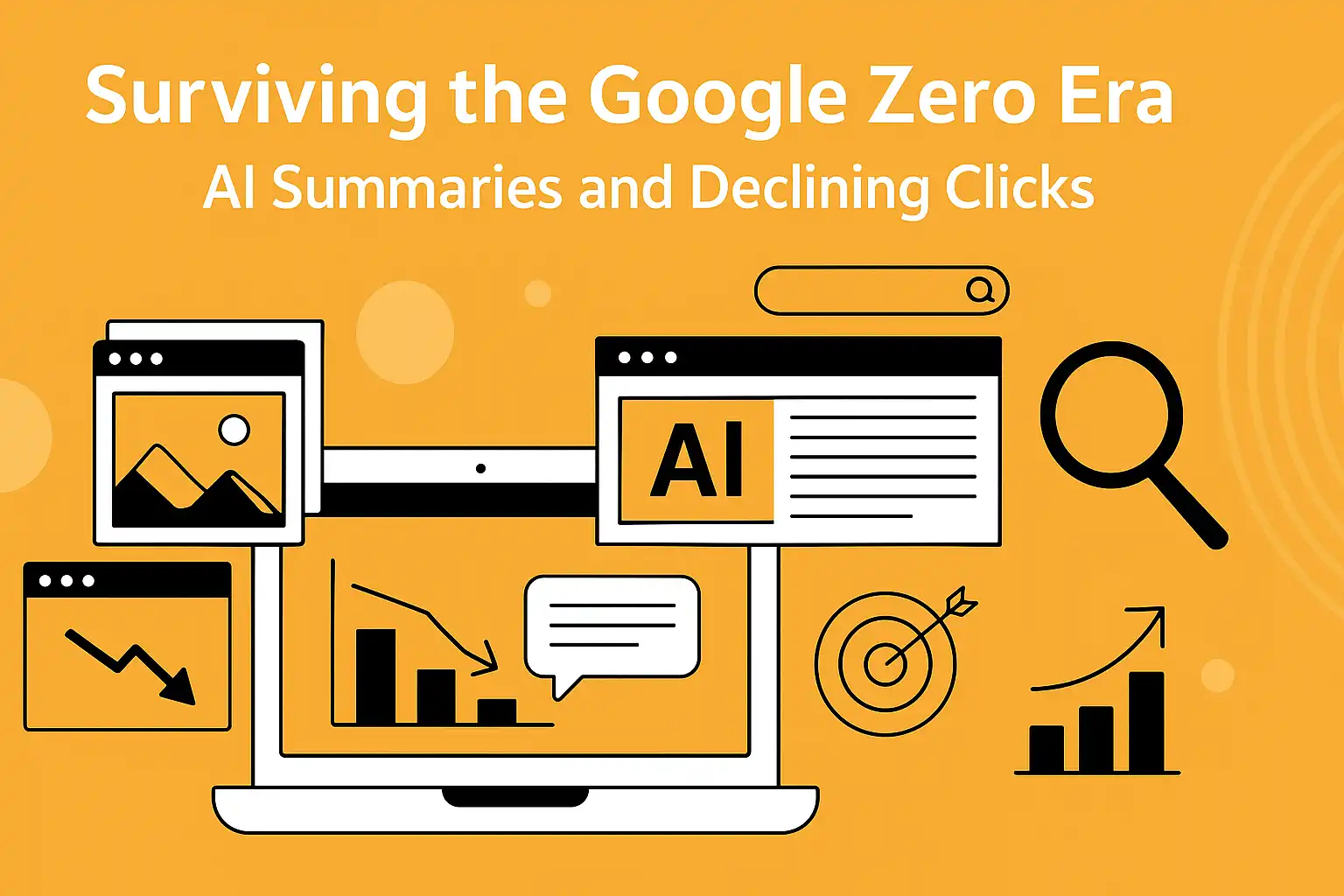
For decades, businesses have relied on Google search to drive traffic to their websites. But in 2025, a major shift is underway: the rise of Google Zero, With AI-powered summaries appearing directly in search results, users often find the answers they need without clicking through to websites.
This new search reality raises serious concerns for brands, publishers, and marketers in the Gulf and worldwide. How can businesses survive in a world where traditional organic traffic is shrinking? This article explores the concept of Google Zero, its implications, strategies to adapt, and best practices to stay visible.
What Is Google Zero?
Google Zero refers to the scenario where search engines—powered by AI—provide instant answers, summaries, and recommendations directly on the results page.
– Instead of showing only blue links, Google now uses AI Overviews to generate a synthesized response.
– Users get information immediately without clicking external websites.
– As a result, publishers and businesses lose traffic, even if their content is well-ranked.
For marketers in the Gulf, this means rethinking SEO strategies and preparing for a future where visibility does not always equal website visits.
Why Is Google Moving Toward AI Summaries?
Google’s mission has always been to provide the fastest and most accurate answers. AI makes this possible by:
– Summarizing long articles into short, digestible answers.
– Aggregating content from multiple sources to create a more complete response.
– Improving user experience by reducing clicks and saving time.
While this is convenient for users, it creates a challenge for businesses that depend on traffic for revenue.
The Impact of Google Zero on Website Traffic
Reduced Clicks: Even top-ranking pages now experience declining click-through rates because the AI summary answers the query upfront.
Competition with AI Summaries: Websites are no longer competing only with other publishers but also with Google’s own AI-generated overviews.
Implications for Gulf Businesses:
– E-commerce in Saudi Arabia: product descriptions and FAQs may appear directly in Google summaries.
– Tourism in Dubai or Doha: travel advice might be answered without the user ever clicking a booking site.
– Education providers: course details could be summarized by Google AI instead of driving users to official websites.
Strategies to Survive in the Google Zero Era
1. Optimize for AI Summaries: Instead of resisting, aim to become the source that Google’s AI uses. Structure content clearly, answer questions directly, and use schema markup.
2. Build Brand Visibility Beyond Google: Focus on platforms where you can control engagement, such as social media, YouTube, TikTok, and email marketing.
3. Invest in First-Party Data: As organic traffic declines, owning direct relationships with your audience becomes critical. Collect emails, build loyalty programs, and encourage app usage.
4. Prioritize Quality and Authority: High-quality, authoritative content has a greater chance of being quoted in AI summaries.
5. Diversify Traffic Sources: Relying solely on Google is risky. Explore alternative search engines, partnerships, and influencer collaborations.
Best Practices for Content in the Google Zero Era
– Answer FAQs Clearly: Use concise, structured responses to increase chances of being featured.
– Use Rich Snippets & Schema: Help AI identify and display your content.
– Focus on Local SEO: Gulf-based businesses should emphasize location-based keywords (e.g., ‘best real estate in Dubai 2025’).
– Publish Multimedia Content: Videos, podcasts, and infographics are harder to summarize completely—encouraging users to click through.
Case Studies in the Gulf
Hospitality in Dubai: Hotels now publish short, structured guides about local attractions, optimized for AI summaries. This increases visibility even if clicks decline.
Healthcare in Saudi Arabia: Clinics create FAQ-driven content so that even if Google displays a summary, the brand name appears, building authority.
E-commerce in Qatar: Online stores add schema for product reviews and availability to increase chances of being featured in AI responses.
Challenges Ahead
Loss of Ad Revenue: Publishers dependent on display ads may suffer as fewer users visit websites.
Data Ownership: Businesses lose valuable user insights if interactions happen only on Google’s platform.
Increased Competition: Smaller businesses may struggle more than established brands to gain AI recognition.
The Future of SEO in the Google Zero World
SEO is not dead—but it is evolving. Marketers must:
– Think beyond clicks and focus on visibility and branding.
– Embrace content formats that provide value beyond what AI can summarize.
– Build communities and direct channels with customers.
In the Gulf region, where digital adoption is high, the businesses that adapt early will thrive in the Google Zero era.